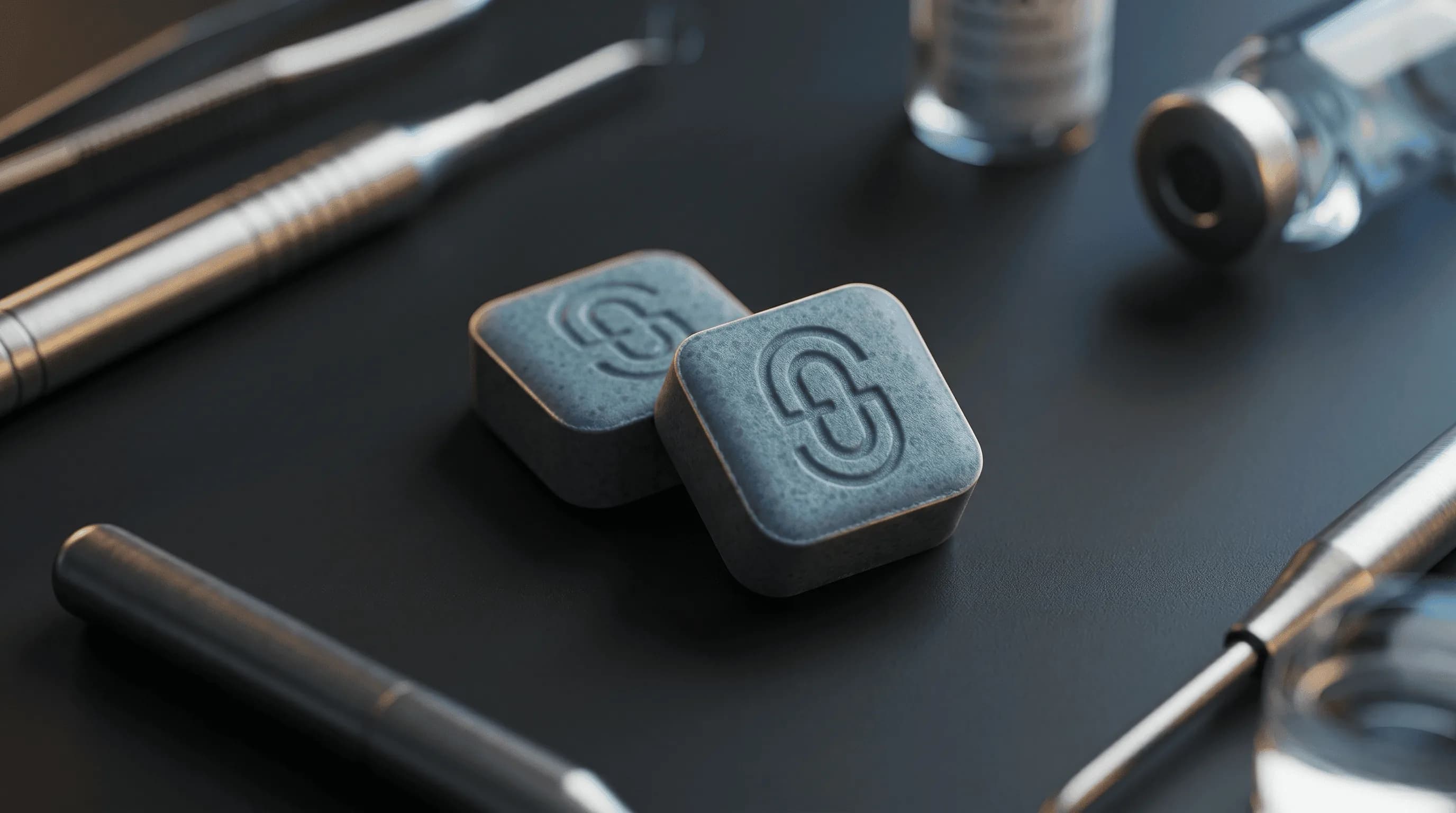

Daily ED chews reflect a shift in how some clinicians think about erectile dysfunction treatment: not only as an on-demand response to a single sexual encounter, but as a steady physiologic support strategy for men whose symptoms are recurrent, vascular, metabolic, or timing-sensitive. Erectile function depends on endothelial nitric oxide release, cyclic GMP signaling, cavernosal smooth-muscle relaxation, arterial inflow, venous occlusion, hormonal context, and central arousal. A daily formulation that combines low-dose PDE5 inhibition with nutrient support is therefore best evaluated through mechanism, evidence, and patient selection rather than through convenience alone.
Daily ED chews and the physiology of steady PDE5 support
Penile erection is primarily a vascular event coordinated by neurologic and hormonal signals. Sexual stimulation triggers nitric oxide release from endothelial cells and nonadrenergic, noncholinergic nerves. Nitric oxide activates soluble guanylyl cyclase, raising cyclic GMP inside cavernosal smooth muscle. Higher cyclic GMP promotes smooth-muscle relaxation, increased arterial inflow, expansion of the corpora cavernosa, and compression of subtunical venous outflow.
Phosphodiesterase type 5, or PDE5, degrades cyclic GMP. PDE5 inhibitors do not create erections independent of arousal; instead, they preserve the downstream signal that follows sexual stimulation. This distinction matters clinically. Men with erectile dysfunction often retain partial erectile capacity, but the hemodynamic response is insufficient, inconsistent, or difficult to sustain. A daily approach aims to make the vascular response more consistently available rather than narrowly tied to a single timed dose.
Daily treatment can also change the behavioral context. Some men experience performance anxiety when sexual activity must be planned around a medication window. Others have variable response because meals, alcohol, sleep, stress, or inconsistent timing interfere with use. A steady regimen may reduce the psychological and logistical burden of “performance scheduling,” though response still depends on underlying vascular health, arousal, medication safety, and adherence.
Tadalafil 5 mg: evidence for once-daily treatment
Tadalafil is pharmacologically suited to daily use because it has a longer half-life than sildenafil or vardenafil. Clinical reviews describe tadalafil as having a longer duration of action, while vardenafil and sildenafil are shorter acting and broadly similar in clinical efficacy across many ED populations [1]. This longer duration allows tadalafil to be used either on demand or as a once-daily medication.
Randomized and controlled clinical evidence supports once-daily tadalafil as a viable strategy for men with erectile dysfunction, including men who previously had only partial responses to on-demand PDE5 inhibitors. In a randomized, double-blind, placebo-controlled trial, men with ED who had demonstrated incomplete response to as-needed sildenafil, tadalafil, or vardenafil were assigned to tadalafil once daily or placebo after a washout period. Endpoint data from 590 men showed that once-daily tadalafil produced significantly better International Index of Erectile Function and Sexual Encounter Profile outcomes than placebo, with generally good tolerability [2].
This evidence does not mean every man should use a daily regimen. It does suggest that daily tadalafil may be clinically reasonable when a man wants more consistent readiness, has recurrent ED, or has an incomplete but present response to intermittent therapy. The key point is that once-daily tadalafil is not simply a lower-dose version of an on-demand strategy; it is a different dosing philosophy built around steady PDE5 inhibition.
Vardenafil: potency, selectivity, and complementary PDE5 inhibition
Vardenafil is another PDE5 inhibitor with a shorter clinical window than tadalafil but a distinct pharmacologic profile. Comparative literature describes vardenafil as potent and selective for PDE5, with efficacy broadly comparable to sildenafil and tadalafil in appropriate patients [1]. Clinical trials and meta-analyses have shown improvements in penetration, maintenance, and erectile-function domain scores versus placebo.
The rationale for including vardenafil in a daily formulation is not that “more PDE5 inhibition” is automatically better. ED treatment should never be reduced to dose escalation. Rather, tadalafil and vardenafil differ in half-life, onset characteristics, selectivity, patient-level response, and tolerability. Some men respond differently to different PDE5 inhibitors even when the final pathway is similar. A carefully dosed combination may be designed to support both baseline readiness and responsiveness, provided the patient is medically screened and instructed appropriately.
This is where physician supervision becomes central. PDE5 inhibitors share important contraindications, especially use with nitrates, and require caution in men with unstable cardiovascular disease, significant hypotension risk, certain alpha-blocker regimens, or complex antihypertensive therapy. A daily combination strategy should be prescribed only after a clinician assesses cardiovascular risk, medication interactions, adverse-event history, and whether ED may be a marker of broader vascular disease.
Vitamin D3 and erectile function: what the data suggest
Vitamin D status has become a clinically relevant topic in erectile dysfunction research because vitamin D deficiency is associated with endothelial dysfunction, inflammation, metabolic disease, and reduced nitric oxide bioavailability. These mechanisms overlap with common vascular drivers of ED. The evidence is not conclusive enough to treat vitamin D as an ED medication by itself, but it is strong enough to justify attention to deficiency as part of broader men's health assessment.
A 2021 study evaluated men with ED and vitamin D deficiency who received daily tadalafil 5 mg either alone or with vitamin D3. Both groups improved, but the group receiving vitamin D3 plus tadalafil had greater improvements in erectile function and sexual desire scores. The authors concluded that adding vitamin D to daily tadalafil may have an additional positive effect in men with documented deficiency [3].
A more recent prospective cohort study published in 2026 followed men treated with daily tadalafil 5 mg and found that baseline vitamin D level was associated with treatment response. Among 172 men included in the final analysis, 88.4% reported symptomatic improvement after one month, and men with vitamin D levels at or above 20 ng/mL showed faster responses. The authors reported a nonlinear association, with the strongest relationship below approximately 19.6 ng/mL [4].
These findings should be interpreted carefully. Vitamin D may be a marker of general health, outdoor activity, metabolic status, or vascular function, not a single causal lever. But in men with ED and low vitamin D, correction of deficiency may support a more complete clinical strategy, especially when combined with therapies acting on the nitric oxide-cGMP pathway.
Vitamin K2: vascular context, not an ED cure
Vitamin K2 is often discussed in relation to vascular calcification, matrix Gla protein activation, and calcium handling in the arterial wall. Its role in erectile dysfunction is less directly studied than tadalafil, vardenafil, or vitamin D. For that reason, K2 should not be presented as a proven ED treatment. The more appropriate clinical framing is vascular context.
Erectile dysfunction is frequently vascular before it is visibly cardiovascular. Penile arteries are smaller than coronary arteries, so endothelial dysfunction, impaired vasodilation, arterial stiffness, and cardiometabolic risk can appear as erection difficulty before a man develops more obvious cardiovascular symptoms. Nutrients that support vascular biology may be relevant to long-term health, but they do not replace evidence-based ED medications or cardiometabolic risk management.
In a formulation context, vitamin K2 is best understood as part of a broader nutrient-informed design rather than the primary active erectile agent. Its inclusion should be paired with conservative claims: it may support vascular health in appropriate nutritional contexts, but clinical outcomes for ED depend on PDE5 signaling, endothelial function, cardiometabolic status, neurologic integrity, hormones, mental health, and medication safety.
Who may be appropriate for a daily strategy
A daily ED formulation may be most relevant for men with recurring erectile difficulty rather than rare situational episodes. It may fit men who dislike timing medication around intimacy, men who respond inconsistently to on-demand therapy, men with vascular risk factors, or men whose symptoms coexist with low vitamin D status. It may also appeal to men who prefer a discreet chewable format, provided the formulation is still treated as prescription medication rather than a supplement.
It may be less appropriate for men who use nitrates, have unstable angina, severe hypotension, recent cardiovascular events without clearance, significant drug interactions, or unexplained severe ED that has not been evaluated. Men with new ED should also consider medical assessment beyond sexual function. ED can be an early sign of diabetes, hypertension, dyslipidemia, sleep apnea, depression, medication side effects, low testosterone, or vascular disease.
Daily use also requires realistic expectations. Clinical studies suggest that PDE5 inhibitors may support erectile function in many men, but response varies. Some men need lifestyle changes, weight loss, exercise, improved sleep, reduced alcohol, smoking cessation, testosterone evaluation, pelvic floor therapy, mental health support, or adjustment of medications that impair sexual function. A chewable formulation can be useful, but it is not a substitute for identifying the cause.
Safety and clinical monitoring
The safety profile of PDE5 inhibitors is well characterized, but familiar does not mean risk-free. Common adverse effects include headache, flushing, nasal congestion, dyspepsia, dizziness, back pain, or muscle aches depending on the agent. Rare but serious concerns include priapism, sudden visual or hearing symptoms, symptomatic hypotension, and dangerous interactions with nitrate medications.
Clinician oversight should include medication reconciliation, cardiovascular screening, blood-pressure considerations, and counseling on when to seek urgent care. Men should understand that PDE5 inhibitors are not aphrodisiacs and do not override the need for sexual stimulation. They should also avoid combining prescription ED medications from multiple sources, since overlapping vasodilatory effects can increase risk without improving the underlying physiology.
Daily ED chews are therefore best viewed as a prescription strategy for selected men: steady PDE5 support from tadalafil, a complementary PDE5 profile from vardenafil, and nutrient support with vitamin D3 and K2 framed around vascular and deficiency considerations. The clinical value depends on proper screening, appropriate dosing, and realistic expectations.
Conclusion
The rationale for daily ED chews is strongest when it is grounded in physiology. Tadalafil supports sustained PDE5 inhibition, vardenafil offers a distinct PDE5 profile, vitamin D3 may matter in men with deficiency or suboptimal vascular signaling, and vitamin K2 belongs in the conversation as vascular-context support rather than a direct ED therapy. For men with recurrent ED, inconsistent response to on-demand medication, or timing-related anxiety, a supervised daily strategy may support more predictable sexual function while also prompting evaluation of broader cardiovascular and metabolic health.
If you're exploring clinically-formulated options, OnyxMD offers EPIQ CHEWS as a physician-supervised daily treatment plan with free online assessment at questionnaire.getonyxmd.com. Related men's health education is available in the blog, and product details are available at /products/epiq-chews.
These statements have not been evaluated by the FDA. This content is for informational purposes only and does not constitute medical advice.
References
- Doggrell SA. Comparison of clinical trials with sildenafil, vardenafil and tadalafil in erectile dysfunction. Expert Opinion on Pharmacotherapy. 2005;6(1):75-84. doi:10.1517/14656566.6.1.75
- Kim ED, Seftel AD, Goldfischer ER, Baygani SK, Burns PR. Comparative efficacy of tadalafil once daily in men with erectile dysfunction who demonstrated previous partial responses to as-needed sildenafil, tadalafil, or vardenafil. Current Medical Research and Opinion. 2015;31(2):379-389. doi:10.1185/03007995.2014.989317
- Demirci A, Cakan M, Topcuoglu M. Whether adding vitamin D to tadalafil 5 mg treatment is useful in patients with erectile dysfunction and vitamin D deficiency? Urologia Internationalis. 2021;105(5-6):514-519. doi:10.1159/000514056
- Yang H, et al. Nonlinear association between vitamin D levels and response to tadalafil 5 mg daily treatment in erectile dysfunction patients: a prospective cohort study. International Journal of Impotence Research. 2026. doi:10.1038/s41443-026-01242-7
Medical Disclaimer: The information provided on this website is for educational and informational purposes only and is not intended as medical advice. OnyxMD services should not be used to diagnose, treat, cure, or prevent any disease or medical condition. Always consult with a qualified healthcare provider before beginning any supplement regimen or health program.
FDA Disclaimer: These statements have not been evaluated by the Food and Drug Administration. This product is not intended to diagnose, treat, cure, or prevent any disease.
Individual Results: Results may vary. The experiences and testimonials presented on this website are individual results that may not be typical. Your experience may be different.
Telehealth Services: OnyxMD provides telehealth services in 47 states (excluding AK, MS, NJ) through licensed healthcare providers via our partner Beluga Health, P.A. Services are subject to clinical evaluation and may not be appropriate for all individuals. Prescriptions fulfilled by Strive Pharmacy LLC (License #99-9817) and EPIQ SCRIPTS LLC.